
Social Media Profile Optimization Guide: Build a Profile That Ranks and Converts in 2026
Master social media profile optimization with proven strategies for keyword research, bio writing, and link management to boost your discoverability and turn followers into customers.
In today's digital landscape, your social media profile is often the first interaction someone has with your brand. Whether you are a freelancer, a small business owner, or part of a large corporation, these profiles act as dynamic storefronts.
They are no longer just places to share personal updates; they are powerful tools for discovery, especially since over 31% of consumers now use social channels as primary search engines. A well-crafted profile does more than just look good—it actively works to convert passive scrollers into engaged followers and potential customers.
This guide will walk you through everything you need to know to build a profile that ranks well and resonates with your target audience.
What is a Social Media Profile?
A social media profile is a digital identity on platforms like Instagram, LinkedIn, Facebook, or TikTok that represents an individual, brand, or organization. It serves as a centralized hub containing essential information about who you are and what you offer.

Typically, it includes visual elements like a profile picture and cover image, along with textual components such as a display name, username, and a bio section. More importantly, it functions as a landing page that houses your content and provides pathways for users to connect with you further, often through a website link or a "link in bio" tool.
Unlike a static website, a social media profile is designed for ongoing interaction, showcasing your latest posts and allowing for direct communication with your audience.
Key Elements of a Successful Social Media Profile
What separates a high-performing profile from one that gets ignored? It comes down to a few critical components that work together to create a strong first impression.
1. The Visual Identity: Profile and Cover Images
Your profile picture is the tiny thumbnail that follows you everywhere in the comments and DMs. For brands, a high-resolution logo is standard. For individuals, a clear, friendly headshot builds trust.
The cover image (or banner) is prime real estate to promote a current offer, a new product, or your brand's core value proposition. Consistency across platforms ensures users can instantly recognize your brand.
2. The Bio: Your Elevator Pitch
You have approximately 150 characters to explain what you do and why someone should follow you. This is not the place for vague statements. You need to clearly state your value proposition.
A freelance web designer might write: "I help coaches build websites that book clients." This immediately tells visitors the "what," the "who," and the "result."
3. Name and Username Optimization
This is a critical and often overlooked aspect of SEO on social platforms. Your display name (e.g., "Jane Doe | Marketing Coach") and your handle (@janedoemarketing) should include relevant keywords that people actually search for. If you search for "marketing coach," you want your profile to appear.
Why is a Complete Social Media Profile Important?
An incomplete profile acts as a credibility killer. When potential customers land on your page and encounter a missing bio, a generic avatar, and no posts, they'll likely assume your business is inactive or unprofessional. A complete social media profile signals legitimacy and active engagement.
Furthermore, Google now indexes social content regularly. Your TikTok videos, Instagram posts, and X (Twitter) threads can appear directly in Google search results. This means your social media profile actively contributes to your overall search footprint. When you maintain consistent naming conventions and complete metadata across all channels, you help Google's algorithms confidently link those profiles to your brand, improving visibility everywhere.
A fully fleshed-out social media profile also provides seamless user experiences, guiding visitors effortlessly from initial discovery through to conversion—whether that means signing up for your newsletter, purchasing a product, or booking a consultation.
How to Build the Perfect Social Media Profile (Step by Step)
Building the perfect social media profile isn't about luck; it is a strategic process. To stand out in a crowded feed, you need a blend of psychology, data, and consistency. Follow this deep-dive guide to construct a profile that doesn't just exist but performs.
Step 1: Define Your Target Audience and Niche
Before you type a single word, you must understand who you are talking to. If you try to speak to everyone, you will resonate with no one. Look at your competitors' comment sections to see what their audiences are asking. What are the pain points? What language do they use? Defining your audience allows you to tailor your bio and content to speak directly to their needs.
For example, if you are a financial advisor, speaking to "new graduates" requires a vastly different tone and vocabulary than speaking to "pre-retirees." This step ensures your profile attracts the right people, not just a high volume of irrelevant followers.
Step 2: Keyword Research for Your Niche
Think of keywords as the bridge between what your audience is searching for and the content you create. Platforms like TikTok and LinkedIn are now sophisticated search engines. You need to find out what your audience types into that search bar.
-
Use Platform Search Bars: Start typing your core service (e.g., "vegan recipes") into the search bar of your target platform. Look at the autofill suggestions—these are real, high-volume searches.
-
Analyze Competitors: Look at the bios and captions of successful accounts in your niche. What terms do they consistently use?
-
Leverage Tools: Use tools like Semrush's Keyword Magic Tool or Topic Research to uncover questions people are asking about your industry online. Compile a list of 10-15 core keywords and phrases that you will naturally weave into your name, bio, and posts.
Step 3: Optimize Your Name and Bio for Search
Now, it's time to apply your keywords. Your display name is one of the heaviest-weighted fields in platform algorithms. Instead of just your brand name, add a descriptor.
-
Bad Example: "Taylor's Bakery"
-
Good Example: "Taylor's Bakery | Gluten-Free Cookies NYC."
By adding "Gluten-Free Cookies NYC," you instantly tell the algorithm and the user exactly what you offer and where.
In your bio, use clear, scannable language. You can use emojis as bullet points to break up text, which improves readability on mobile. Incorporate one or two of your primary keywords naturally. For instance: "Specializing in gluten-free cookies delivered fresh in NYC." This reinforces your relevance for those searches.
Step 4: Curate Your Content Strategy and Visual Grid
Your profile is the sum of your posts. Before a user follows you, they will likely scroll through your recent content to see if it aligns with their expectations. Your visual grid—especially on visually-driven platforms like Instagram—needs to be cohesive. This doesn't mean every photo looks the same, but the overall aesthetic should feel like you.
Plan your content around the keywords you identified. If "easy vegan dinners" is a top keyword, ensure that type of content is prominently featured. Consistency in quality and theme tells the platform that you are an authority on that topic.
Step 5: Link Strategy: Driving Traffic Off-Platform
This is where many profiles fail. You have captured their attention, and now you need to direct them to your website, shop, or newsletter. Most platforms only allow one clickable link. Using just your website URL is a missed opportunity. This is where a Link-in-Bio tool becomes essential.
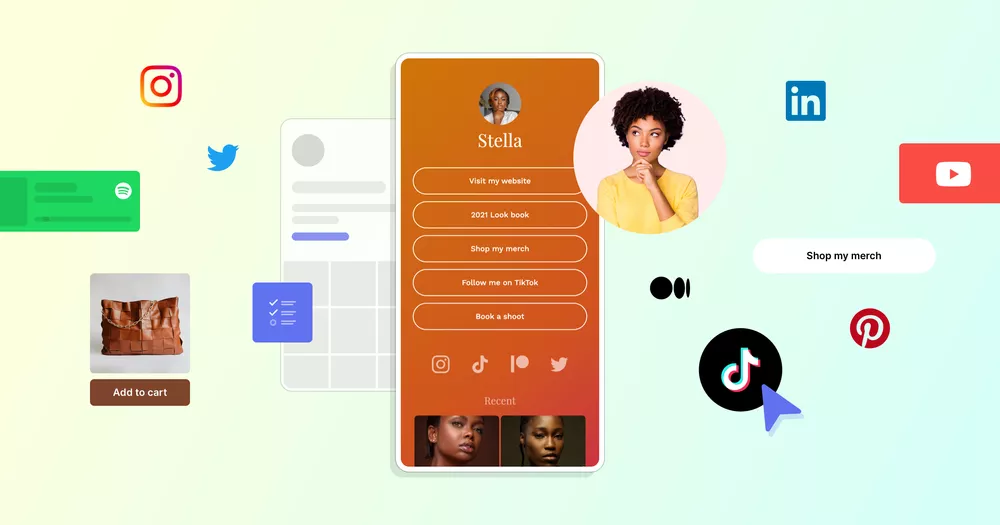
Instead of a single link, you need a landing page that hosts multiple links to your latest blog post, your YouTube channel, your current sales page, and your newsletter sign-up. For those looking for a robust yet simple solution, Biovelt is an excellent choice.
It is a completely free Link in Bio tool that allows you to add an unlimited number of links, ensuring you never have to choose just one destination for your traffic. You can select from various professional themes to create a personalized micro-landing page that matches your brand aesthetic.
Furthermore, Biovelt provides link tracking, allowing you to see in real-time how many clicks each link receives, so you know exactly where your traffic is going and what offers are resonating with your audience. This turns your bio link from a simple URL into a powerful conversion tool.
Step 6: Add Relevant Contact Information and CTAs
Make it easy for opportunities to find you. If you are a business, utilize platform-specific features like "Action Buttons" on Facebook or "Contact" options on Instagram.
These can link directly to WhatsApp, email, or your booking page. Your bio should also contain a clear Call-to-Action (CTA). Tell users exactly what you want them to do. Examples include "Grab my free guide below ⬇️," "Shop the sale," or "Book your consult today."
5 Tips for Writing a Successful Social Media Profile
Sometimes, the smallest tweaks make the biggest difference. Here are five actionable tips to elevate your profile writing today.
-
Use "People-First" Language: Write with emotion and authenticity. People connect with people, not faceless brands. Share a mini-mission statement or a personal belief that aligns with your audience.
-
Front-Load Important Information: Put the most critical information at the beginning of your bio. On mobile, users often see only the first two lines before they have to click "more." Don't bury your value proposition.
-
Incorporate Social Proof: If you've been featured in a major publication or won an award, mention it! A simple "As seen in Forbes" or "Awarded Best Local Baker 2025" builds instant trust.
-
Leverage the "Link in Bio" Effectively: Don't just leave the link there. Tease it. Use a phrase like "The waitlist for my course is now open! Grab your spot here" to give users a reason to click.
-
Maintain Consistent Tone Across Platforms: Whether you are funny, professional, or inspirational, your tone should be recognizable across LinkedIn, Instagram, and TikTok. This consistency builds a memorable brand identity.
FAQs about Social Media Profile
What is the difference between a personal profile and a business profile?
A personal profile is for individual connection and sharing with friends. A business profile (or creator profile) offers access to analytics tools, advertising features, and contact buttons. It signals that you are operating commercially.
How often should I update my social media profile?
You should review your profile at least quarterly. However, you should update specific elements immediately if you launch a new product, change your pricing, or run a time-sensitive promotion. The link in your bio should be updated weekly to point to your latest and most relevant content.
Can a social media profile hurt my Google search rankings?
An inconsistent or incomplete profile doesn't directly hurt your website's ranking, but it creates a poor user experience. If Google sees multiple, conflicting profiles for your brand, it may have a harder time trusting your entity, which can indirectly impact how your brand appears in search results.
Why is my social media profile not showing up in searches?
This usually happens due to a lack of optimization. Your profile might be missing relevant keywords in your name and bio, or your account privacy settings may be blocking indexing. Ensure your account is public and your handle and display name are optimized for your niche.
Conclusion
Your social media profile represents the most valuable real estate in your digital marketing portfolio. It serves as the gateway through which potential customers decide whether to engage with you or scroll past forever. By treating your profile as a dynamic, searchable landing page rather than a static placeholder, you unlock massive organic growth opportunities while strengthening your overall personal branding in the process.
Focus on clarity, consistency, and genuine value delivery. Optimize your visuals, refine your bio with targeted keywords, and ensure your link strategy creates clear journeys toward conversion. The search landscape continues evolving rapidly—social media platforms now function as discovery engines, not just social spaces. By perfecting your social media profile today, you ensure that when your ideal customers come looking, they find exactly what they need: you.