
Link in Bio Platforms in 2026: How to Choose the Right Platforms for Growth
This guide explores how Link in Bio Platforms have evolved in 2026, what features matter most, how different tools fit different creator needs, and how to optimize your bio link for stronger traffic and conversions.
In 2026, social media algorithms are internalizing traffic more aggressively than ever. With major platforms actively suppressing outbound links to keep users within their own ecosystems, your single "link in bio" is no longer just a digital business card—it’s the high-stakes choke point of your entire monetization funnel.
Simple button-stack pages still work, but they’re no longer enough for creators who want measurable conversion performance. Today, your bio page has one non-negotiable job: reduce friction. The best link in bio platforms have evolved into lightweight conversion hubs that help creators seamlessly collect emails, sell digital products, book high-ticket calls, and track cross-platform attribution within a single click.
However, choosing the right tool is easy to get wrong. While many utility apps look identical on the surface, they differ drastically under the hood. Some focus on raw speed and minimalist layouts, while others overload your page with tracking scripts that stall mobile load times.
This guide strips away the marketing hype to compare the strongest link in bio platforms in 2026 based on real-world conversion metrics.
Why Link in Bio Platforms Matter More Than Ever in 2026
A few years ago, adding a link-in-bio page was mostly about convenience. You wanted followers to find your latest post, your YouTube channel, or your store without constantly changing your profile link. That’s no longer enough.
Today, your bio link is often the first step in your conversion funnel. It’s where casual social visitors become subscribers, customers, or leads. The strongest link in bio platforms help guide that process instead of simply listing URLs.
This matters because social media attention is fragmented. Someone may discover you through TikTok, check your Instagram profile, and finally click your bio link before deciding whether to trust your brand.
That means your page has one job: reduce friction.
Good link in bio platforms make action obvious. Bad ones create clutter.
This is why creators are moving away from outdated “button stacks” and toward modern link in bio platforms with stronger visual hierarchy, dynamic layouts, and better mobile performance. Reddit creators repeatedly mention that generic layouts often underperform because they feel disposable and fail to reflect a real brand identity.
What to Look for When Choosing Link in Bio Platforms
Not all link in bio platforms solve the same problem.
Before choosing one, decide what your main goal is.
If you’re growing a creator business, monetization tools matter. If you’re building trust, customization matters. If you rely on traffic campaigns, analytics and load speed matter more than anything else.
The best link in bio platforms usually excel in five areas.
1. Customization That Feels Native to Your Brand
People notice generic pages immediately.
If your page looks identical to thousands of others, trust drops. The strongest link in bio platforms give enough control over typography, layouts, spacing, and visual blocks to make the page feel intentional.
This matters more than people think. Visitors judge credibility fast.
2. Click Tracking That Actually Helps Decisions
Most tools offer analytics. Few make the data useful.
Useful link in bio platforms tell you:
-
Which links get ignored
-
Which CTAs drive action
-
What traffic source performs best
-
What device users click from
-
What content deserves higher placement
Without that, optimization becomes guesswork.
3. Mobile Speed
This gets ignored constantly.
Many link in bio platforms overload pages with scripts, widgets, and animations. That hurts loading speed, especially on mobile networks.
Slow pages kill clicks.
Fast-loading link in bio platforms consistently outperform visually bloated alternatives because users rarely wait more than a few seconds.
4. Integration Depth
If your workflow includes Instagram, TikTok, Shopify, Stripe, YouTube, Calendly, or email software, your platform should connect cleanly.
Modern link in bio platforms are increasingly acting as mini business hubs rather than static landing pages.
5. Pricing
Some tools look cheap until basic features are locked behind aggressive upgrades.
A good platform grows with you without forcing expensive jumps every few months.
6 Best Link in Bio Platforms Compared for 2026
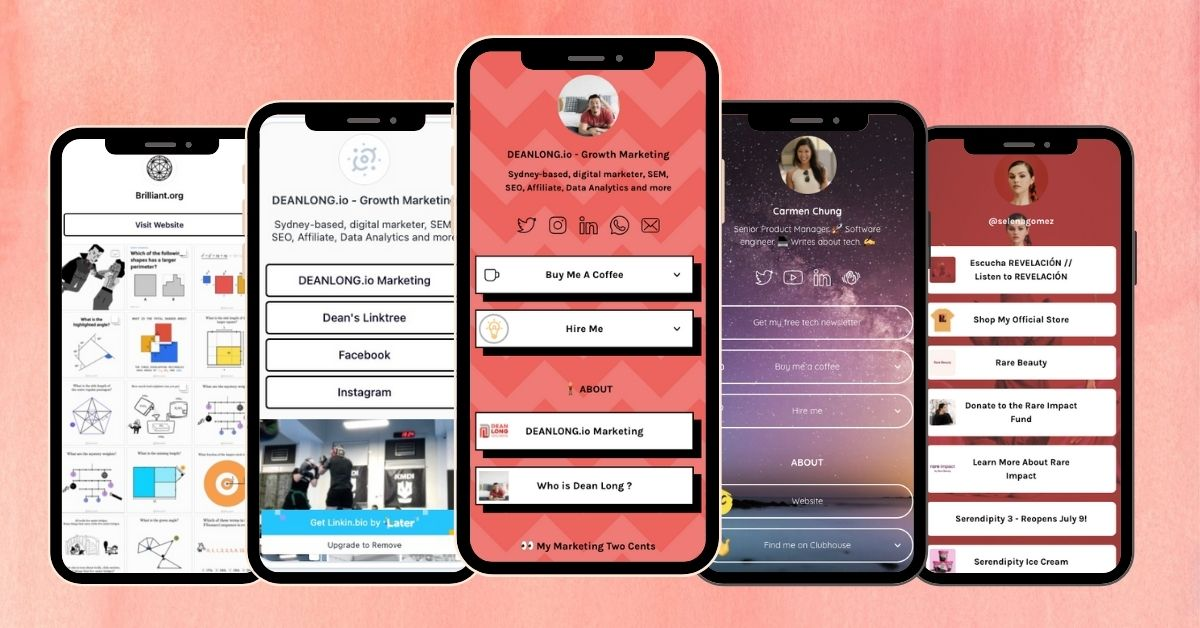
After reviewing top-ranking comparisons and testing common creator workflows, these are the strongest link in bio platforms right now.
1. Biovelt — Best Modern Link in Bio Platform for Conversion-Focused Creators
Biovelt has become one of the more interesting link in bio platforms because it focuses on clean conversion design instead of feature overload.
The interface is simple enough for beginners, but it gives enough flexibility to build pages that feel polished and premium.
Biovelt supports:
-
unlimited links
-
click analytics
-
custom themes
-
visitor tracking
-
flexible layouts
-
strong mobile responsiveness
For creators who want a clean page that converts without spending hours designing, it’s one of the better link in bio platforms available. However, its template variety is still narrower than mature incumbents.
2. Linktree — Best for Familiarity
Linktree remains the most recognized name in link in bio platforms.
That brand familiarity helps beginners feel comfortable.
It’s reliable, easy to set up, and offers enough features for casual users. But compared to newer link in bio platforms, customization still feels limited unless you pay.
Its design often looks recognizable in ways that reduce uniqueness.
3. Beacons — Best for All-in-One Creator Monetization
Beacons has evolved far beyond a simple link directory, operating as a robust operational dashboard for full-time creators. It packs digital storefronts, email marketing capture, media kit generators, and direct monetization tools into one space.
The downside? The platform is heavy. For creators simply seeking a fast, minimalist routing page, Beacons' extensive feature set can feel overwhelming and can occasionally impact mobile page responsiveness.
4. Later Linkin.bio — Best for Instagram-Centric E-commerce
Later is tailor-made for creators and brands whose primary traffic engine is a visual Instagram feed. Its core strength is recreating a clickable version of your Instagram grid, allowing users to tap a photo and jump directly to a specific product page or article.
While highly effective for e-commerce stores, it offers limited flexibility for multi-channel creators on TikTok or YouTube.
5. Tap.bio — Best for Mobile Storytelling
Tap.bio feels different from most link in bio platforms because it uses card-style navigation.
For creators who want a swipe-based experience that feels native to mobile users, it’s compelling.
Its downside is flexibility. Tap.bio works best for lightweight storytelling, not complex funnels.
6. Shorby — Best for Messenger Funnel Traffic
Shorby is one of the more conversion-focused link in bio platforms for businesses using WhatsApp, Messenger, or direct communication funnels.
It’s practical and functional, though visually less modern than newer competitors.
Free vs Paid Link in Bio Platforms: Which Option Makes Sense?
Most creators start with free link in bio platforms.
That’s smart. You shouldn’t pay before proving traffic exists.
Free plans usually give enough to launch quickly. But eventually, limitations appear.
Usually these include:
-
forced branding
-
weak analytics
-
limited themes
-
restricted integrations
-
slower support
Paid link in bio platforms become worth it when your profile is driving measurable traffic.
If you’re earning from affiliate links, products, coaching, or partnerships, even a small lift in conversion often pays for the upgrade quickly.
The mistake is paying too early for features you won’t use. Choose based on actual bottlenecks.
Best Link in Bio Platforms for Different Use Cases
Different creators need different link in bio platforms. There isn’t one universal winner.
For Instagram Influencers
Visual branding matters most.
Biovelt, Later, and Tap.bio work well here because presentation strongly affects click trust.
Related Reading: How to Add a Link to Instagram Bio?
For TikTok Creators
Speed matters more than visual polish.
TikTok traffic is impulsive. Visitors click fast and bounce fast.
Fast-loading link in bio platforms like Biovelt and Linktree tend to perform better here.
For Coaches and Consultants
Lead capture matters.
Beacons and Biovelt both support stronger CTA-focused layouts that work well for booking calls and collecting leads.
For Ecommerce Brands
Product visibility matters.
Later and Beacons work especially well because they support stronger commerce-focused layouts.
How to Set Up Link in Bio Platforms for Maximum Results
Setting up link in bio platforms is about more than adding links to a page. The way your page is structured directly affects whether visitors click or leave.
A well-organized page should feel easy to scan, visually consistent, and focused on a clear next step. The strongest-performing creators usually spend as much time refining their bio page as they do creating social content.
Prioritize One Primary Goal
A common mistake is giving visitors too many choices at once. When people see a long list of unrelated links, they often hesitate and leave without taking action.
The best link in bio platforms work best when you highlight one clear priority. This might be a product launch, newsletter signup, booking page, or featured content piece. Visitors should immediately know where to click first.
Organize Supporting Links Clearly
Once your primary action is visible, secondary links should be grouped into logical categories.
For example, creators often separate content links, social proof, digital products, and contact information into different sections. This makes navigation feel easier and reduces decision fatigue.
Well-organized link in bio platforms guide users naturally instead of forcing them to search for information.
Keep Branding Consistent
Visual consistency builds trust quickly. If your social profile feels polished but your bio page looks generic, visitors notice the disconnect immediately.
The strongest link in bio platforms allow you to customize colors, typography, spacing, and layouts so your page feels like an extension of your brand rather than a third-party tool.
This small detail often improves conversion more than creators expect.
Review Analytics Regularly
Publishing your page is not the final step. Optimization happens after real visitors interact with it.
Most modern link in bio platforms include click tracking that shows which links perform best and which get ignored. Reviewing this data helps you adjust button placement, improve CTAs, and remove underperforming links.
Small changes often lead to noticeable gains over time.
Are Link in Bio Platforms Good for SEO?
Many creators assume link in bio platforms can meaningfully improve organic search rankings. In most cases, that expectation is unrealistic.
A link in bio page is not a replacement for a properly optimized website, content hub, or long-form SEO strategy. Most link in bio platforms are designed for traffic routing and conversion, not for building search visibility at scale.
That said, they can still support your broader digital presence when used strategically.
They Help Create Brand Consistency Across Platforms
Search visibility is often shaped by consistency. When your Instagram profile, creator name, personal website, and link in bio page all present the same branding, messaging, and links, it becomes easier for users to recognize and trust your brand across channels.
This does not directly improve rankings on its own, but it can strengthen overall brand discoverability and create a cleaner search experience for people actively looking for you.
They Improve the Experience of Branded Search Traffic
A large percentage of creator-driven search traffic is branded. People often search for a creator, product, or offer after discovering it through TikTok, Instagram, or YouTube.
A well-structured bio page helps capture that interest by giving visitors a clear path to your most important destinations, whether that is a newsletter signup, product page, booking form, or featured content.
In this sense, link in bio platforms work less like SEO assets and more like conversion bridges between discovery and action.
They Can Support Campaign Visibility
For launches, promotions, or short-term campaigns, some creators use dedicated bio pages to organize traffic around a specific offer.
While these pages rarely rank competitively for broader search terms, they can make campaign-related branded searches easier to navigate and reduce friction for returning visitors.
This is especially useful when traffic is coming from multiple social channels at once.
The Real Value Is Conversion, Not Rankings
The strongest link in bio platforms are valuable because they help organize attention and guide action.
If your goal is long-term organic search growth, your primary investment should still be high-quality website content, technical SEO, and strong internal linking architecture.
Your bio page works best as a supporting layer—one that connects social traffic to the parts of your ecosystem that actually drive sustainable search and business growth.
Final Thoughts on Link in Bio Platforms
The role of link in bio platforms has changed dramatically over the last few years. What used to be a simple workaround for social media limitations has become an essential part of digital growth strategy.
The strongest link in bio platforms help creators do more than organize links. They guide traffic, improve conversions, and create smoother paths from attention to action.
As competition across social platforms continues growing, creators who optimize this small part of their funnel often gain an edge that’s easy to underestimate.
Choosing the right link in bio platforms won’t instantly transform your business. But over time, better clicks, stronger engagement, and smarter conversion paths can compound into measurable growth.