
How to Write a LinkedIn Bio: Step-by-Step Guide With Examples
Discover how to write a LinkedIn bio that increases profile visibility, attracts recruiters and clients, and showcases your professional value through strategic positioning and authentic personal branding.
LinkedIn is no longer just an online resume. In 2026, it functions as a search engine, networking platform, and personal branding tool all at once. Whether you're applying for jobs, attracting freelance clients, building authority in your industry, or expanding your professional network, your LinkedIn bio often shapes the first impression people form about you.
Many professionals spend hours updating job descriptions and skills while overlooking one of the most visible sections of their profile: the About section. Yet this is often where recruiters, hiring managers, and potential clients decide whether to keep reading.
Learning how to write a LinkedIn bio isn't about summarizing your resume. It's about positioning yourself clearly, communicating your value, and giving people a reason to connect.
Why Is a LinkedIn Bio Important?
Your LinkedIn bio is often one of the first sections visitors read after viewing your headline. Before recruiters review your experience or clients explore your portfolio, many will quickly scan your bio to understand who you are and what value you provide.
A strong bio helps communicate your expertise in a way that feels human rather than transactional. While job titles and work history provide context, your bio allows you to tell your professional story. It connects the dots between your skills, achievements, and career goals.
For job seekers, a well-written bio can increase visibility in recruiter searches and make applications more memorable. For freelancers and consultants, it helps establish trust before potential clients initiate contact. For entrepreneurs, it strengthens personal branding and creates credibility around their business.
In short, learning how to write a LinkedIn bio is not simply about filling out a profile section. It's about positioning yourself strategically in front of the people you want to attract.
Key Elements of an Effective LinkedIn Bio
Before diving into how to write a LinkedIn bio, it helps to understand the core components that make bios effective.
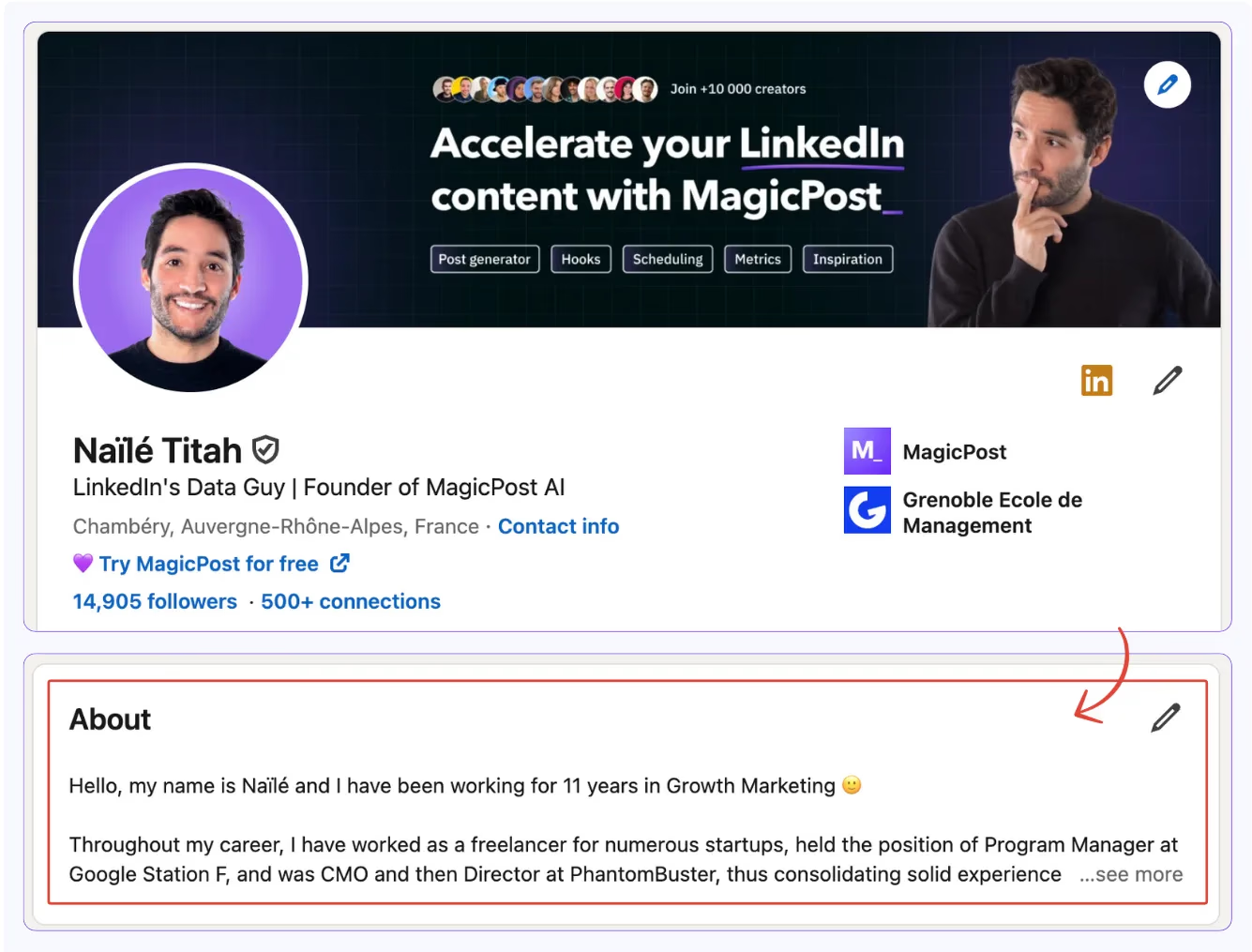
1. A Clear Professional Identity
Readers should immediately understand what you do. Avoid vague descriptions such as "passionate professional" or "results-driven individual." Instead, clearly state your role, specialization, or area of expertise.
For example:
"I help SaaS companies increase organic traffic through SEO-driven content strategies."
This tells readers exactly what the person does and who they help.
2. Relevant Expertise
Your bio should highlight the skills and knowledge most relevant to your audience. Rather than listing every competency you've developed throughout your career, focus on areas that support your current goals.
Recruiters, clients, and collaborators want clarity. The more focused your positioning, the easier it becomes for people to understand your value.
3. Achievements and Results
Specific accomplishments add credibility. Whenever possible, include measurable outcomes.
Examples include:
-
Increased website traffic by 250% within 12 months
-
Managed marketing campaigns generating over $1 million in revenue
-
Led product launches across 15 international markets
Numbers help transform claims into evidence.
4. Personality
Many LinkedIn bios sound interchangeable because they rely heavily on corporate jargon. Adding a small amount of personality makes your profile more memorable.
You don't need to be overly casual. Simply allowing your genuine interests, motivations, or approach to work to come through can make a significant difference.
5. A Call to Action
An effective bio encourages readers to take the next step.
Examples include:
-
Connect with me to discuss digital marketing strategies.
-
Feel free to reach out if you're hiring growth-focused marketers.
-
Always open to conversations about SaaS, SEO, and content growth.
A simple CTA gives readers direction and increases engagement.
How to Write a LinkedIn Bio: Step by Step
This is the most important section for anyone learning how to write a LinkedIn bio effectively.
Step 1: Identify Your Audience
Before writing anything, determine who you want your profile to attract.
Ask yourself:
-
Are you targeting recruiters?
-
Potential clients?
-
Industry peers?
-
Investors?
-
Business partners?
Your audience influences your tone, messaging, and the achievements you emphasize.
For example, a software engineer seeking employment will write differently than a consultant looking for new clients.
Step 2: Start With a Strong Opening
The first few lines are critical because they determine whether readers continue.
Avoid generic openings such as:
"I am a hardworking professional with a passion for success."
Instead, focus on value and expertise.
Examples:
"I help eCommerce brands scale organic traffic through data-driven SEO strategies."
"Over the past decade, I've helped healthcare organizations improve patient engagement through digital transformation."
Strong openings immediately establish relevance.
Step 3: Explain What You Do
After your opening, provide more context about your role and professional focus.
This section should answer questions such as:
-
What problems do you solve?
-
Who do you help?
-
What industries do you work in?
Readers should quickly understand your area of expertise.
For example:
"As a content marketing strategist, I work with B2B software companies to build content systems that generate qualified leads and support long-term growth."
Specificity creates clarity.
Step 4: Highlight Key Achievements
Achievements provide proof of your capabilities.
Rather than saying:
"I have extensive marketing experience."
Try:
"My campaigns have contributed to over 5 million annual website visits and helped multiple startups achieve double-digit revenue growth."
Results create confidence.
Focus on accomplishments that align with your current career goals rather than listing every achievement from your past.
Step 5: Showcase Your Unique Strengths
Many professionals have similar qualifications. What makes you different?
Consider:
-
Industry expertise
-
Leadership experience
-
Technical skills
-
Communication abilities
-
Unique career background
Your differentiators help distinguish you from competitors.
For example:
"My background combines software engineering and product marketing, allowing me to bridge technical and business teams effectively."
This positioning immediately feels more memorable.
Step 6: Add a Human Element
People connect with people, not resumes.
Adding a brief personal element can make your profile more approachable.
Examples:
-
Passionate about mentoring young professionals
-
Interested in AI and emerging technologies
-
Enjoy helping startups navigate early-stage growth
The goal is balance. Keep the focus professional while allowing some personality to come through.
Step 7: End With a Call to Action
The final section should encourage interaction.
Examples:
"If you're interested in content growth strategies or partnership opportunities, feel free to connect."
"Always open to conversations about product marketing, SaaS growth, and digital innovation."
A CTA turns passive readers into active contacts.
Read More: How to Write a Bio for Instagram?
4 LinkedIn Bio Frameworks That Actually Work
Most online templates look nearly identical. Instead of copying generic formats, use a framework that aligns with your goals.
1. The Authority Framework
Best for experienced professionals.
Current role + expertise + measurable achievements + industry focus
Example structure:
I help [audience] achieve [outcome].
Over the past [years], I've delivered [results].
Today I focus on [specialization].
2. The Problem-Solver Framework
Best for consultants and freelancers.
Problem + solution + proof + invitation
Example structure:
I help [audience] solve [problem].
Recent projects have generated [results].
If you're facing similar challenges, let's connect.
3. The Founder Framework
Best for entrepreneurs.
Mission + customer problem + company vision
Focus less on your title and more on the value your business creates.
4. The Career Transition Framework
Best for professionals changing industries.
Past expertise + transferable strengths + future direction
This framework helps explain career changes while maintaining credibility.
LinkedIn Bio Examples: What Actually Makes a Bio Stand Out?
Most LinkedIn bio examples online focus on the finished result. The problem is that readers see the final bio but never learn why it works.
Instead of copying templates, study the positioning strategies behind strong profiles.
Example 1: The Specialist Positioning Strategy
Weak positioning:
"Experienced digital marketer helping businesses grow online."
Stronger positioning:
"SEO strategist helping B2B SaaS companies build organic acquisition systems that generate qualified pipeline growth."
Why it works:
The second example narrows the audience, defines a specialization, and communicates a measurable business outcome. Recruiters and clients immediately understand the professional's focus.
The lesson: specificity almost always outperforms broad positioning.
Example 2: The Results-First Strategy
Weak positioning:
"I have extensive experience managing marketing campaigns."
Stronger positioning:
"Over the past five years, I've helped SaaS startups grow organic traffic from zero to more than 500,000 monthly visits through SEO and content operations."
Why it works:
People trust evidence more than claims. Results create credibility faster than adjectives.
The lesson: replace descriptions of responsibilities with measurable outcomes whenever possible.
Example 3: The Hybrid Expertise Strategy
Many professionals have experience across multiple disciplines but struggle to communicate their unique value.
Example:
"My background combines software engineering and product marketing, allowing me to translate technical complexity into customer-facing growth strategies."
Why it works:
The bio highlights an uncommon combination of skills rather than listing separate experiences.
The lesson: your strongest differentiator is often the intersection of multiple skill sets.
Example 4: The Founder Positioning Strategy
Weak positioning:
"Founder building innovative solutions."
Stronger positioning:
"Founder focused on helping independent creators monetize audiences through subscription-based digital products."
Why it works:
Rather than describing the founder, it describes the problem being solved.
The lesson: audiences care more about the value you create than the title you hold.
Example 5: The Future-Focused Strategy
Example:
"Currently leading AI adoption initiatives in enterprise environments while exploring how generative AI can reshape internal knowledge management."
Why it works:
Strong profiles don't only describe the past. They communicate where the professional is heading next.
The lesson: your bio should reflect both current expertise and future direction.
Best Tips to Optimize Your LinkedIn Bio for More Visibility
Knowing how to write a LinkedIn bio is only half the equation. The other half is making sure people can actually find it. LinkedIn functions as a search engine, and profile visibility often depends on how well your content aligns with user searches and platform algorithms.
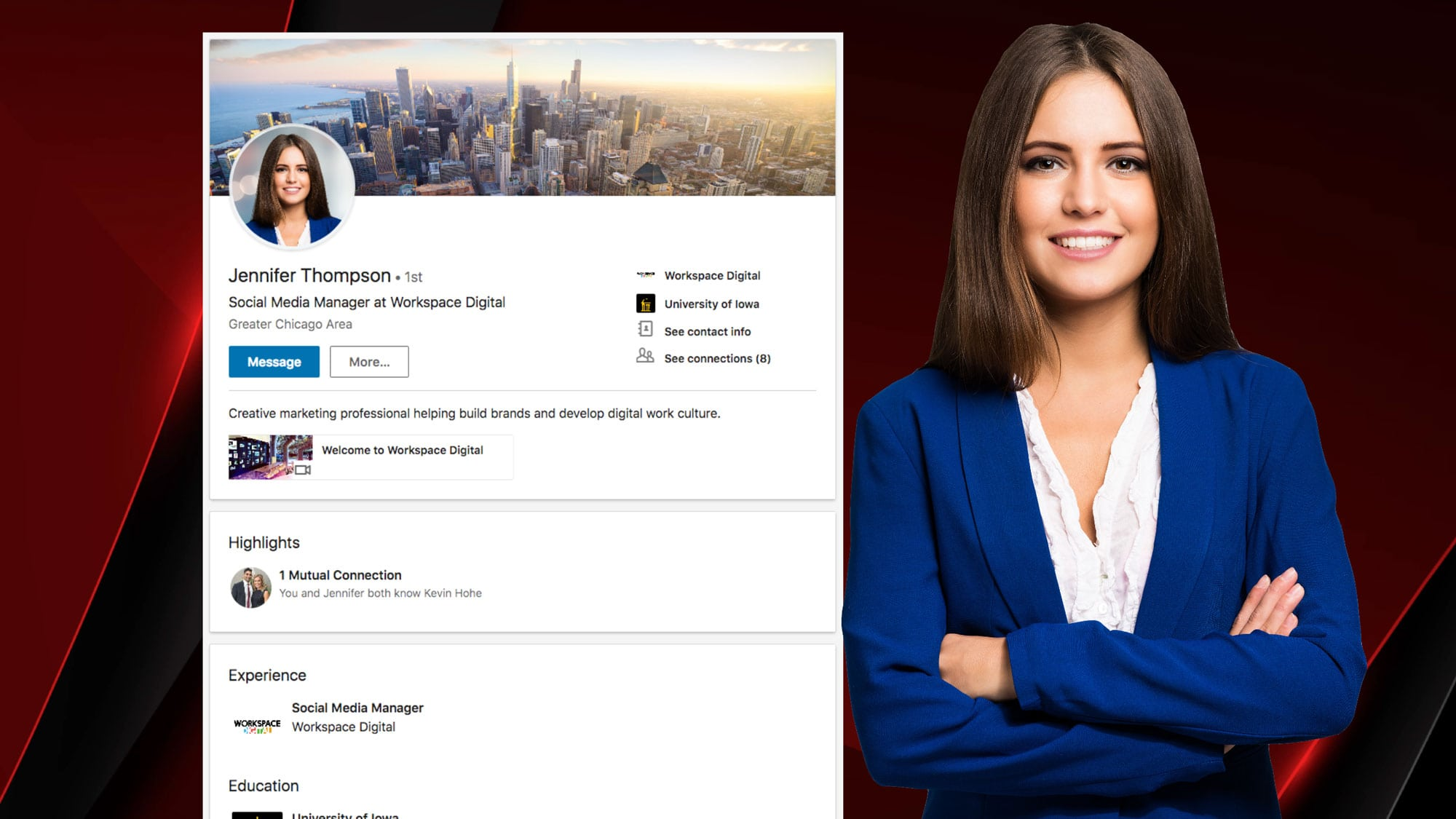
Use Industry Keywords Naturally
LinkedIn's search system relies heavily on keywords. Recruiters frequently search for candidates using specific job titles, skills, certifications, and industry terms.
For example, if you're a digital marketer, terms such as:
-
SEO
-
Content Marketing
-
Demand Generation
-
PPC Advertising
-
Marketing Analytics
should appear naturally throughout your profile.
However, avoid stuffing keywords into every sentence. Modern search systems prioritize relevance and readability. Your bio should sound like it was written for humans first.
Align Your Bio With Your Headline
One common mistake is creating a headline and bio that communicate completely different messages.
For example, if your headline says:
"Growth Marketing Manager Helping SaaS Companies Scale Revenue"
Your bio should reinforce that positioning through examples, achievements, and expertise related to growth marketing and SaaS.
Consistency strengthens personal branding and helps visitors immediately understand your professional focus.
Prioritize Results Over Responsibilities
Many LinkedIn users describe what they were responsible for rather than what they accomplished.
Compare these examples:
Weak:
"Managed social media campaigns."
Strong:
"Managed social media campaigns that increased engagement by 180% and generated over 10,000 qualified leads."
Results create credibility because they demonstrate actual impact.
Keep Paragraphs Easy to Read
Most profile visitors spend less than a minute scanning a LinkedIn profile.
Large walls of text often discourage readers from engaging with your content. Instead, break information into shorter paragraphs and focus each paragraph on a single idea.
A well-structured bio improves readability and increases the likelihood that visitors will finish reading.
Update Your Bio Regularly
A LinkedIn bio should evolve alongside your career.
Many professionals write a bio once and never revisit it. As your experience grows, your positioning, achievements, and goals may change.
Review your bio every few months and ask:
-
Does this reflect my current expertise?
-
Does it support my current career objectives?
-
Are there newer accomplishments worth mentioning?
Regular updates help keep your profile relevant and competitive.
Include Relevant Links
Many professionals use LinkedIn to direct visitors toward additional content such as portfolios, websites, newsletters, case studies, or social platforms.
If you manage multiple resources, organizing them through a single landing page can create a better user experience. Tools like Biovelt make this simple by allowing professionals to place unlimited links on a customized page, making it easier for recruiters, clients, or collaborators to access everything from one location.
The key is ensuring any links support your professional goals and add value for profile visitors.
Write for Humans Before Algorithms
While optimization matters, your primary audience remains people.
The most successful LinkedIn bios combine discoverability with authenticity. Readers should feel they are learning about a real professional rather than reading a collection of keywords.
A clear, conversational writing style almost always outperforms overly corporate language.
What to Avoid When Writing a LinkedIn Bio
Many professionals understand the basics of how to write a LinkedIn bio but still make mistakes that reduce effectiveness.
Using Generic Buzzwords
Terms like:
-
Results-driven
-
Innovative
-
Strategic thinker
-
Passionate professional
appear in countless profiles.
These phrases rarely differentiate you because almost everyone uses them. Instead of claiming qualities, demonstrate them through achievements and examples.
Writing a Biography Instead of a Value Proposition
Your bio should not simply summarize your career history.
Readers want to know:
-
What do you do?
-
Who do you help?
-
Why should they trust you?
Focus on value rather than chronology.
Trying to Appeal to Everyone
Broad positioning often weakens your message.
For example:
"I help businesses succeed."
is much less compelling than:
"I help B2B SaaS companies improve customer acquisition through content marketing."
Specificity attracts the right audience.
Ignoring Metrics
Without measurable results, many claims feel subjective.
Whenever possible, include numbers that demonstrate impact.
Metrics help transform your bio from descriptive to persuasive.
Making the Bio Too Long
While detail matters, excessive length can reduce engagement.
Aim for enough information to communicate expertise without overwhelming readers. Every sentence should have a purpose.
FAQs About How to Write a LinkedIn Bio
How Important Are Keywords in a LinkedIn Bio?
Keywords help recruiters discover your profile, but placement matters more than repetition. The strongest keywords should appear naturally throughout your headline, bio, experience section, and skills.
What Is the Biggest Mistake Most Professionals Make?
Most people write a career summary rather than a value proposition. Visitors care less about where you've worked and more about what value you can create.
Should My LinkedIn Bio Match My Resume?
Not exactly. A resume documents your professional history. A LinkedIn bio communicates your positioning and professional value.
How Do Recruiters Actually Read LinkedIn Profiles?
Most recruiters scan headlines, bios, current roles, and recent achievements before deciding whether to explore the rest of a profile.
Should I Mention Future Career Goals?
Yes. Strong bios communicate both current expertise and future direction, helping attract opportunities aligned with your long-term goals.
Conclusion
A LinkedIn bio is not a summary of your resume. It's a positioning statement.
The strongest LinkedIn bios clearly communicate who you help, how you create value, and why someone should trust your expertise. They combine specificity, measurable results, relevant keywords, and a touch of personality to create a profile that feels both discoverable and authentic.
Before updating your entire LinkedIn profile, start with your bio. Small improvements in clarity and positioning can significantly increase profile views, recruiter interest, and professional opportunities.